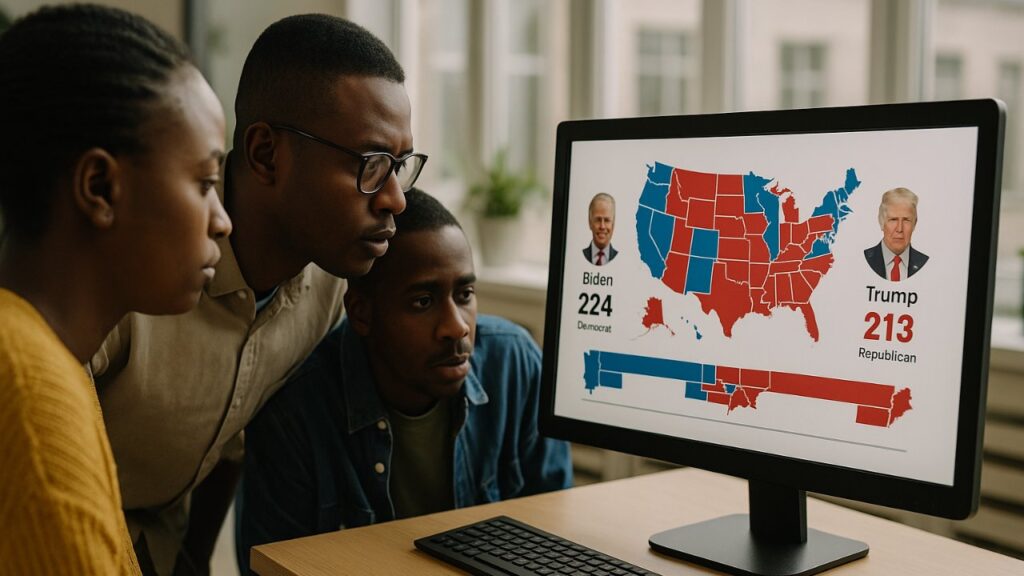
US Election Results – The 2024 US presidential election not only captivated American citizens but also drew massive attention from global audiences—especially in South Africa. As results poured in and uncertainty loomed over swing states, South African netizens turned to search engines in record numbers. This surge in interest wasn’t limited to the outcome itself but extended to real-time updates, key candidates, voter turnout, and electoral processes. The spike in Google searches reveals a growing global interconnectedness, where the political shifts of one nation significantly impact public discourse in others. According to Google Trends, South Africa ranked among the top countries outside the US searching for “US election results” and “Who won the US election” during the peak vote-counting period. This reflects not only curiosity but also awareness of how US policies influence global affairs—including trade, immigration, tech regulations, and diplomatic relations. The cross-continental fascination with this event shows that for many South Africans, the outcome of the US election feels deeply relevant to their own futures and policy landscapes.

Why South Africans Are So Invested in US Election Outcomes
One might wonder why citizens in a country thousands of miles away are glued to updates about another nation’s democratic process. The answer lies in the profound global influence of US policy and leadership. In South Africa, shifts in the White House can lead to economic ripples through trade relations, aid funding, and foreign investment decisions. Additionally, US-based tech firms, energy policies, and visa reforms often shape local industries and opportunities. This was particularly visible during the Trump and Biden administrations, where divergent foreign strategies impacted global cooperation on climate, economic equity, and even vaccine distribution. South Africans are keen observers, recognizing that leadership changes in the US can influence everything from fuel prices to international development partnerships. As reported by the BBC, African nations closely monitor US political transitions to anticipate shifts in aid programs, investment flows, and diplomatic engagement.

Google Trends and the Rise of Digital Political Awareness in South Africa
The recent election marked a turning point in how digital tools are used by South Africans to engage with global events. According to data from Google Trends, the top queries during the vote-counting days included “US election results live,” “electoral college map,” and “Biden vs Trump swing states.” This indicates a heightened political literacy and engagement via online platforms. Social media platforms like Twitter (X), YouTube, and TikTok were flooded with reactions, analyses, and live discussions from South Africans, revealing a digital-savvy public increasingly invested in international developments. Educational institutions and political think tanks have played a role in cultivating this awareness through programs that emphasize global citizenship and media literacy. This growing trend of cross-border political interest is a positive sign of democratic curiosity, especially among younger South Africans. As highlighted in a Reuters analysis, South Africa was among the few African nations consistently ranking in the top 10 for election-related searches throughout the final counting days.

How US Elections Influence African Policy and International Aid
The leadership dynamics in the United States often play a pivotal role in shaping the economic and humanitarian outlook of African nations. South Africa, being a regional powerhouse, finds itself at the center of many such interactions. From AGOA (African Growth and Opportunity Act) to USAID funding and security cooperation programs, US administrations have historically shaped the continent’s development agendas. A shift in Washington’s foreign policy priorities can either strengthen or strain bilateral relationships. South Africans, aware of these implications, often look to the US election not just for symbolic meaning but for tangible outcomes that could affect trade, employment, and development aid. As outlined by Brookings Institution, the nuances of US-Africa relations are deeply impacted by who controls the Oval Office, with each administration offering differing levels of commitment to African policy agendas.

The Cultural Impact: Media, Activism, and Identity Reflections
Beyond economics and foreign policy, US elections have also become cultural touchstones in South Africa. Issues like racial justice, gender equity, and climate action—frequently highlighted in US campaigns—resonate with South African youth and civil society. Activists often draw parallels between movements like Black Lives Matter and local efforts against inequality and police violence. During election cycles, South Africans use digital platforms not only to follow results but to engage in debates about leadership values, representation, and social justice. As seen on platforms like X (formerly Twitter), hashtags such as #USElections2024 and #BidenTrumpDebate trended locally, reflecting how cultural narratives from the US election become part of South Africa’s own dialogue on governance and identity. The US remains a powerful cultural exporter, and election cycles serve as a mirror for South Africans to evaluate their democratic systems, political participation, and civic engagement through a comparative global lens.